Veterans say: scrap the $5,000 health cap

The Government plans to cap DVA allied health at $5,000 a year. Veterans will pay with their health. Stand with us and add our voice. This petition will be presented by a Member to The House of Representatives after the signature window closes on July 22nd, 2026.

A neatly folded Australian Defence Force camouflage uniform laid carefully across a clean, light timber table in a quiet home study. An Australian flag patch is stitched on the sleeve, its fabric slightly worn, next to a printed letter from the Department of Veterans’ Affairs discussing allied health services, with key figures like “$5,000 cap” subtly visible but not dominant. Soft afternoon light enters through a nearby window, creating gentle highlights on the textured fabric and mild shadows along the paper’s edges. Shot at eye level with a shallow depth of field, the focus rests on the intersection of uniform, letter, and a closed laptop, conveying a calm yet serious, professional mood in photographic realism.

The petition has been presented — now we fight for the outcome

The petition was presented to the House of Representatives on the 20th of August by Elizabeth Watson-Brown MP, Member for Ryan. The Minister for Veteran’s Affairs, Matt Keogh MP has 90 days to respond.

Get angry. A $5,000 cap on allied health services is not a policy — it’s an insult to every person who has served this country and come home carrying wounds the Government cannot see. Complex injuries don’t fit a budget line.

Maintain the rage. History shows that righteous, sustained pressure is what moves governments to act. We have been heard in the chamber — now we need to be heard in every electorate. Add your voice today and make sure every MP knows that veterans’ healthcare is not negotiable.

Share this page. Talk to your neighbours. Write to your local member. The cap must go — and together, we will make sure it does.
Elizabeth Watson-Brown MP presents the petition to the House of Representatives, 20 August 2026.
Used with the kind permission of the artist.
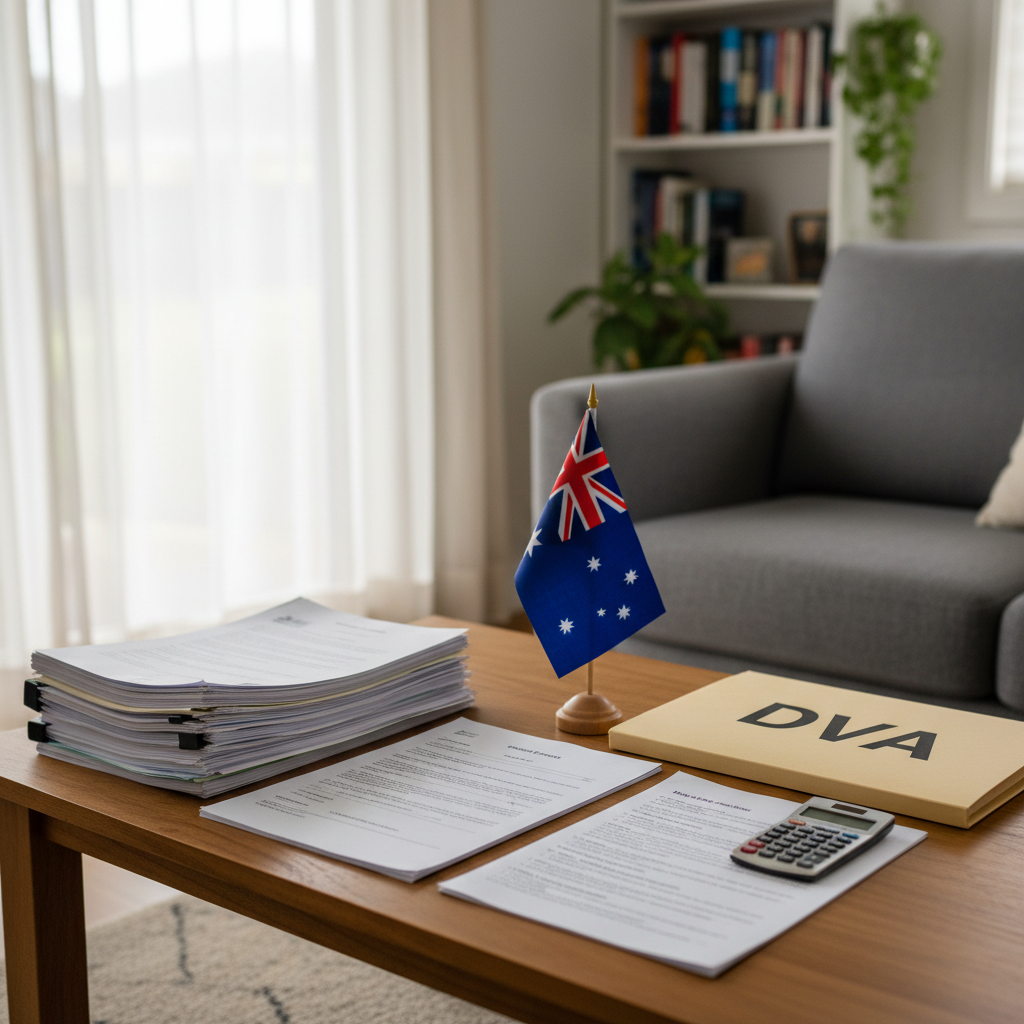
A tidy suburban Australian living room with a modest wooden coffee table covered in neatly stacked medical reports, allied health treatment plans, and a calculator, all arranged with quiet order. A small Australian flag stands in a simple holder at the back of the table beside a closed folder labeled "DVA" without any logos. Diffused overcast daylight filters through sheer curtains, giving soft, even lighting that minimizes harsh shadows. Captured from a slightly elevated angle with a balanced, rule-of-thirds composition, the foreground papers are in sharp focus while the background sofa and bookshelf fall into a gentle blur. The mood is reflective and determined, reinforcing a professional, advocacy-focused campaign in photographic realism.

A veteran-led campaign for fairness

Can the Cap is led by veterans, families and clinicians who know what lifelong care costs. A $5,000 cap ignores complex injuries and shifts the bill from Government to households.

Support the campaign

Donate a gift to keep the campaign running. This is run from my kitchen bench in my kitchen in Tarragindi. Gifts mean that I can continue to pay for the assistive technology subscriptions I rely on to make this campaign possible, printing, and other expenses. My time remains free!

Contact Rebecca

Have a question or want to get in touch? Please use the contact form below to reach out.

← Back

Thank you for your response. ✨

Stay informed

← Back

Thank you

Get the latest campaign news delivered to your inbox.

Updates

A close-up, photographic image of a well-used, olive-green service notebook resting on a smooth, dark wooden desk, its cover subtly embossed with “Service Record” in plain text. Beside it lies a clipped stack of allied health invoices and referral forms with small Australian government crests visible, carefully arranged but not dominating the frame. A fine-point pen is placed parallel to the papers, symbolising readiness for action. Warm desk-lamp light from the upper left creates a focused pool of illumination, leaving the rest of the room in soft shadow. Shot from a low, almost desk-level angle with shallow depth of field, the notebook’s textured cover is razor sharp while the background fades into a calm blur, suggesting quiet resolve and professional advocacy.